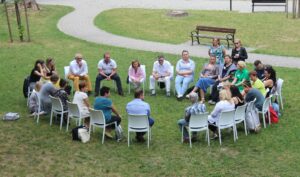


Counting attendance matters. It tells us whether people are engaging and whether programmes are reaching the communities they were intended to reach.
But at Integrate Hope, we believe impact needs to go further than counting how many people entered a room.
We need to ask: What changed because they were there?
Measuring what matters
Different programmes require different measures.
For an employability programme, progress could involve improved confidence, developing a CV, entering training or moving closer to employment.
For a wellbeing programme, it might involve improved confidence, stronger social connections or greater awareness of where to seek support.
For community learning, it could mean improved language confidence or greater independence. For young people, progress might include engagement, relationships, confidence, skills and aspiration.
That is why we use approaches including attendance monitoring, participant feedback and pre- and post-programme measures where appropriate.

Numbers and stories
Quantitative data helps us understand scale and patterns. Qualitative feedback helps us understand experience. We need both.
A statistic may tell us that people attended. A conversation may explain why they kept coming back.
Learning when things don’t work
Accountability also means being willing to learn.
Not every programme will work perfectly first time. Communities change. Needs change. Participation changes.
Good organisations should be able to listen, adapt and improve.
We want our monitoring to help us make decisions, not simply produce numbers for a funding report.
Growing responsibly
As Integrate Hope grows, strengthening our evidence and evaluation will remain an important part of our development.
We want partners and funders to understand what their support achieves. Most importantly, we want communities to know that their feedback influences what we do next.
Impact isn’t simply about proving that activity happened. It’s about understanding whether that activity made a difference.